Inconel 601 resists heat, holds strength at extreme temperatures, and shrugs off corrosion that would damage mild steel in months. That combination makes it a standard choice for custom fabrication work. But shaping it isn’t simple. High hardness and nickel content push back against standard bending techniques and demand different tooling decisions. This post walks through the process of Inconel bending, from angle calculations to brake setup, so your Inconel 601 plate comes out of the shop without cracks, tears, or wasted material.
What are Inconel 601 plates?
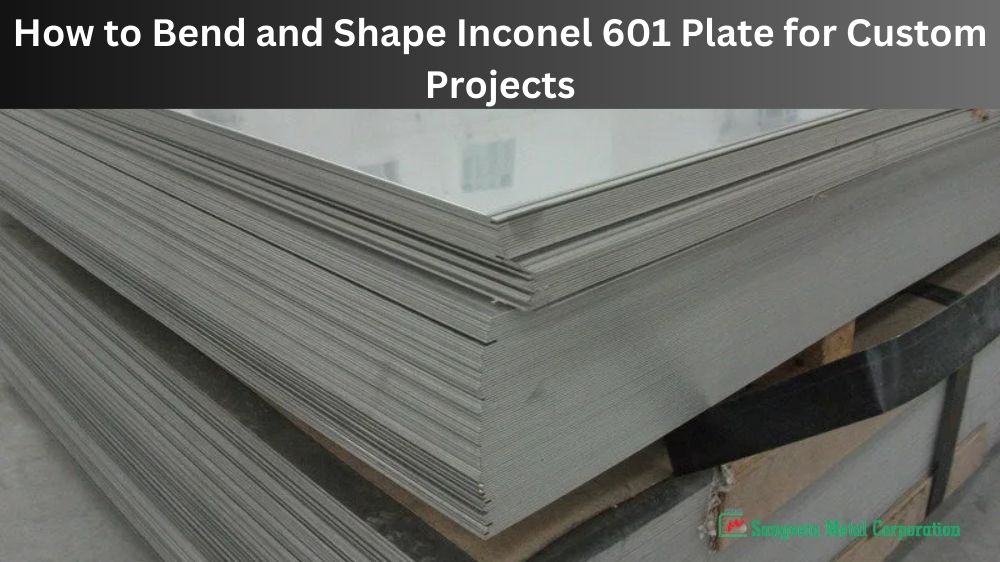
Inconel Alloy 601 Plates are nickel-chromium alloy sheets formulated for extreme oxidation resistance and structural stability at temperatures up to 2,150°F. Chromium content is around 23%, and aluminum adds roughly 1.35%, forming a tight oxide layer that protects the surface even under repeated thermal cycling. This alloy is utilized by engineers in furnace parts, heat exchangers and exhaust systems where inferior metals warp or scale. 601 differs from the straight nickel alloys in that it retains its mechanical properties after long exposure to both oxidizing and reducing atmospheres. This stability, coupled with good weldability, makes it a good choice for the fabricator building parts that must stand up to years of thermal stress without changing shape or strength.
Step 1: Select the Right Tools and Equipment
Using the right tools and equipment to bend and shape Inconel 601 plates for custom projects is important. Start by selecting a press brake that can handle the plate size – this should be determined by the tonnage rating of the machine as well as its capacity. Then, select high-quality tooling, such as V dies, which will help create clean bends with minimal distortion or warping. Finally, utilize sacrificial material when needed; you may need to place a backstop behind each bend to prevent oil traces on your finished product. Following these guidelines will ensure your bending results are accurate and optimized for your project.
Step 2: Prepare the Plate
The plate must be properly prepared before you can bend and shape your Inconel 601 plate for custom projects. This includes cleaning the surface of any debris or contaminants, ensuring that all sharp edges are filed away and countersinking any holes. Additionally, if you plan to cut the plate with a saw blade, lubricate it with oil before cutting to protect against heat-induced wear on the material and tooling. Finally, use a centring tool or straight edge to provide alignment before bending so that your results are accurate and precise. With proper preparation, you will be well on your way towards achieving outstanding results!
Step 3: Determine the Bend Angle
Bend angle selection depends on two things: plate thickness and the alloy’s resistance to deformation. Get this wrong, and you risk cracking. Because this material resists deformation far more than mild steel, the workable bend angle runs tighter, and pushing past that limit invites fractures along the bend line rather than a clean fold.
Project geometry drives the rest of the decision. A bracket with a shallow inner radius calls for a different angle than a long structural channel, and the final dimensions of your part will dictate how aggressive you can be before the metal starts to resist. Angles close to 90° tend to produce the most reliable results during Inconel bending, since sharper angles concentrate stress at the fold and raise the odds of surface cracking. Measure twice before committing the brake, because this alloy doesn’t permit a second attempt at the same fold line.
Step 4: Adjust and Position the Brake
Brake setup starts with the form. Fit a vice or two-arm metal bender to match your material’s profile, then add spacers wherever inner bends need support. Skip the spacers and you’ll likely see distortion or tearing along the inside curve.
Once the form is placed correctly, position the brake itself. Both arms need independent adjustment so each one presses against the material, which keeps results consistent across every bend in the run. A hydraulic press brake needs a different check: set the ram gap to match your plate’s exact thickness, since even a small mismatch here throws off pressure distribution across the fold. Get the ram gap right, and Inconel bends come out uniform, with no crown lines or step marks along the crease. These adjustments take a few extra minutes upfront, but they’re what separate a clean production run from one full of scrapped plates.
Step 5: Bend the Plate
Finally, it’s time to bend the Inconel 601 plate. Slowly lower the upper die until it contacts the plate, then raise it again. Repeat this process until the desired bend angle is achieved. It’s important to note that Inconel 601 plates are prone to cracking if overworked or bent too quickly. It’s better to bend the plate gradually with multiple passes than to force it all simultaneously.
Conclusion
Inconel 601 is a challenging material, particularly in bending and shaping. It requires specialized tools, equipment, and expertise. With the right knowledge and tools, you can bend and shape Inconel 601 plates to create custom projects that meet your specifications. Remember to take your time, keep the plate clean, preheat before bending, and be patient. With these tips, you can achieve excellent results with this high-performance material.