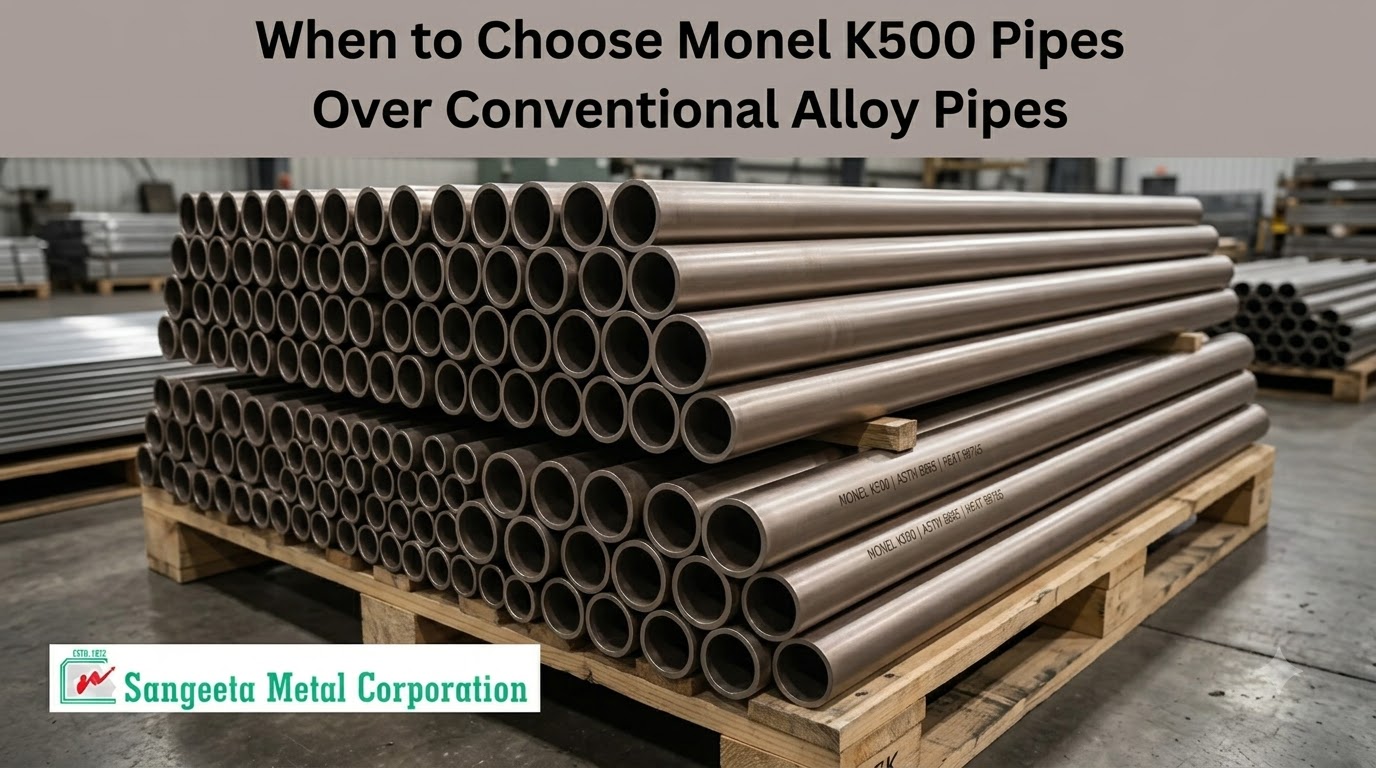
Monel K500 pipes perform well in demanding environments where conventional alloy pipes may struggle with corrosion, high pressure, erosion, and significant mechanical loads. For this reason, offshore operators and chemical processing facilities often choose Monel K500 pipes for applications requiring reliable strength, durability, wear resistance, and long-term operational safety.
Why Conventional Alloy Pipes Reach Their Performance Limits
Chloride attack degrades carbon steel and even standard stainless steel faster than most procurement teams expect, especially in seawater exposure. Duplex steel resists chlorides better but still falls short under high mechanical stress combined with corrosive media. Pump shafts and rotating systems compound the problem: cavitation and wear attack the surface while corrosion works from within.
Marine biofouling adds another failure mode entirely, roughening surfaces and accelerating localized corrosion. Standard nickel alloys handle corrosion reasonably well but lack the mechanical strength for high-load rotating or pressure-bearing components. This gap corrosion resistance without matching strength is exactly where Monel K500 becomes the practical answer.
What the Monel K500 Specification Means for Real Industrial Performance
The Monel K500 specification centers on precipitation hardening through aluminum and titanium additions, which raises strength significantly above Monel 400 while preserving corrosion resistance. UNS N05500 designates the alloy under recognized nomenclature, giving buyers a consistent reference point across suppliers. ASTM B165 covers seamless pipe, while ASTM B163 covers seamless tube both under ASME SB165 and SB163 equivalents for pressure-service applications.
This combination matters because pure corrosion resistance alone doesn’t solve every application. A pump shaft or high-pressure line needs both chemical resistance and mechanical strength working together, and precipitation hardening is what delivers the second half of that equation without sacrificing the first.
Five Situations Where Monel K500 Pipes Become the Better Engineering Choice
1. High Velocity Seawater Pipelines
Fast-moving seawater erodes standard alloys through cavitation and impingement attack. Monel K500 resists both while maintaining corrosion resistance against continuous seawater exposure.
2. Oil and gas offshore production systems
In splash zones and subsea pipes, repeated soaking and drying promote corrosion in weaker alloys. K500’s combination of strength and resistance is used in these transition zones in offshore platforms and maritime equipment.
3. Chemical Plants Handling Aggressive Media
The materials are important for long-term chemical resistance to ensure process reliability. The enhanced mechanical strength extends service life in lines with aggressive process media where standard alloys would need frequent replacement.
4. High Pressure Instrumentation and Process Lines
Higher yield strength enables reliable performance in demanding pressure applications. We at Sangeeta Metal lists minimum yield strength around 790 MPa and tensile strength around 1100 MPa for its K500 products, figures that support instrumentation and process lines operating well above what standard nickel alloys can handle.
5. Marine Equipment Requiring Long Service Life
Marine equipment, such as condensers, desalination units and seawater systems, must provide years of trouble-free service without replacement. Monel K500 has an ideal strength-to-corrosion ratio, which allows for this long life span to be achieved, avoiding the early interventions and structural breakdowns seen with regular conventional alloys.
Understanding Monel Pipe Specification Before Material Selection
Monel pipe specification starts with confirming which standard applies ASTM B165 or ASME SB165 for seamless pipe, with pipe schedule and dimensions matched to the application’s pressure class. Seamless construction generally suits higher-pressure service, while welded options can reduce cost for lower-pressure lines. Inspection requirements and material traceability documentation should accompany every order, giving buyers verification against the exact standard specified rather than a generic mill certificate.
Does Monel K500 Casting Grade Affect Pipe Selection?
Monel K500 casting grade is used in complex valve bodies, pumps and other parts where the geometry does not allow wrought processing. Wrought Monel K500, manufactured in accordance with ASTM and ASME standards, continues to be the piping material of choice because of its dimensional control and uniform mechanical properties throughout the pipe length and its compliance with piping codes which are not always met by cast components.
Questions Procurement Teams Should Ask Before Ordering Monel K500 Pipes
- Which ASTM/ASME specification applies to this application?
- What is the required operating pressure?
- What corrosion environment will the pipe face?
- What pipe size and schedule does the application need?
- Is seamless or welded construction required?
- What material certification accompanies the order?
- Is third-party inspection available?
- What export documentation is needed?
- Will a Mill Test Certificate be provided?
Conclusion
Monel K500 is used where ordinary corrosion resistance is not enough. This grade provides the high strength, wear resistance, and long-term reliability required in demanding marine, offshore and chemical environments. Sangeeta Metal Corporation advises you to explore our extensive Monel K500 pipe characteristics, sizes, and export possibilities so that you can select the grade that most fits your working conditions.