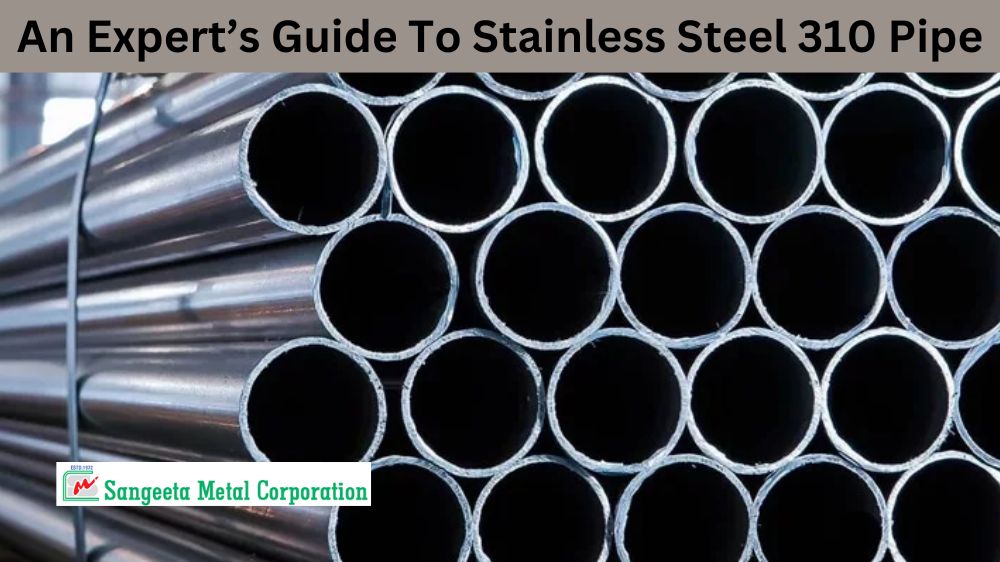
Stainless Steel 310 is a versatile, high-temperature alloy that has become increasingly popular among industrial and commercial sectors in recent years due to its excellent oxidation and heat resistance. Being one of the leading stainless steel pipes available in the market, this impressive material is utilised in various applications such as chemical and petrochemical processing, power generation, oil and gas, and much more. However, if you’re considering the use of this material for your next project, there are a few things you need to know. In this blog post, we’ll be giving you an expert guide to stainless steel 310 pipes to help you make the right decisions when it comes to material selection.
What Is Stainless Steel 310 Pipe?
Stainless Steel 310 Pipe is an alloy with nickel and chromium as the primary elements. It is more resistant to heat, corrosion, and oxidation compared to other stainless steel grades. It finds use in high-temperature processes like boiler tubes, furnace tubes or power plant tubes since it maintains strength at temperatures of up to 2000°F (1093°C). Its wear resistance extends the life of pipes while its low magnetic permeability ensures high precision in flow rate measurement. Moreover, its good weldability allows it to be easily shaped and joined into components without compromising its strength and durability. Typically, Stainless Steel 310 pipe is a good choice for diversified industrial uses requiring high corrosion resistance as well as high tensile strength and heat resistance.
Understanding Stainless Steel 310
Before we dive into the specifics of 310 stainless steel pipe, it’s essential to have a general understanding of the alloy itself. Stainless steel 310 is a heat-resistance alloy which is used for resisting oxidation up to 1100°C. It includes 25% chromium and 20% nickel and offers corrosion and oxidation resistance. Furthermore, this grade has superior mechanical properties, good weldability, and superior resistance to thermal fatigue, making it a top choice in extreme heat environments.
Applications Of Stainless Steel 310 Pipe
Stainless Steel 310 tubing is generally utilized in high-temperature and corrosion-resistant applications like chemical and petrochemical processing, power plant, oil, and gas, as well as furnace components. 310 stainless steel tubing is utilized to transfer corrosive chemicals or solutions where lower steel grades are not suitable in the chemical processing sector. Moreover, it is ideal for use in the manufacturing of furnace parts, such as radiant tubes, because of its ability to withstand thermal cycling.
Types Of Stainless Steel 310 Pipe
There are two types of stainless steel 310 pipes available in the market: Seamless and Welded. Seamless pipes are made from solid stainless steel, while welded pipes are created by rolling or bending a flat metal strip and then welding the seam. Seamless pipes offer better tolerance and have more uniformity than welded pipes. Seamless pipes also carry a greater weight per meter and are less prone to bending or buckling due to heavy loads. Welded pipes, on the other hand, are generally cost-effective than seamless pipes and provide greater mechanical strength in certain uses.
Advantages Of Using Stainless Steel 310 Pipe
Stainless Steel 310 pipe has several benefits compared to other materials. First, it has superb resistance to heat, which means it can be used where there is very high heat in the environment. Second, it is very resistant to corrosion and oxidation, guaranteeing long-lasting service in difficult conditions. Thirdly, it has excellent mechanical properties, including high strength and good ductility, ensuring a low risk of failure even under high pressure. Lastly, stainless steel 310 pipe is versatile and can be fabricated into many different shapes and sizes to meet specific project requirements.
Maintenance Of Stainless Steel 310 Pipe
Stainless steel 310 pipe requires minimal maintenance due to its excellent resistance to oxidation and corrosion. Yet, it’s necessary to perform regular inspections to see that the pipes are clean and free from debris which will eventually lead to corrosion and clogging. When cleaning the pipes, do not use any abrasive materials or cloths since they will ruin the surface of the material. Instead, use mild detergents or soft cloths or brushes to clean the pipes. Maintenance will increase the service life of the pipe and prevent high repair costs.
Conclusion
In summary, stainless steel 310 pipe provides an outstanding blend of mechanical strength, high-temperature resistance, and corrosion resistance, which makes it an ideal material for industrial applications. It is important to know the advantages, uses, and varieties of 310 stainless steel pipe for any project that demands high-quality, durable piping. If you have queries or would prefer to talk to us about your project needs, please get in touch with us today, and we will be happy to guide you in making the correct decision, regarding choosing the ideal stainless steel 310 pipe for your intended application.